
How to Choose an Architect for a Custom Home
The right architect should do more than design a beautiful house. They should understand how you live, reveal possibilities you have not considered, and guide the project from its earliest questions through construction.
How to Choose an Architect for a Custom Home
The right architect should do more than design a beautiful house. They should understand how you live, reveal possibilities you have not considered, and guide the project from its earliest questions through construction.
Choosing an architect for a custom home is ultimately a decision about trust, judgment, and creative compatibility.
A strong portfolio matters, but it is only the beginning. The right architect should listen closely, communicate in ways you understand, define their services clearly, and have the experience and authority to guide hundreds of interconnected decisions from the first conversation through construction.
A custom home can influence how your family begins each morning, gathers at the end of the day, hosts friends, works, rests, and grows over time. Choosing the person who will help shape those experiences deserves more consideration than simply selecting the firm whose photographs most closely resemble the house you imagine today.
Understand What You Are Really Hiring
Many prospective clients first think of an architect as someone required to produce drawings and obtain a building permit. That may be one part of the role, but it does not describe the full value an architect can bring to a custom home.
At their best, architects are translators. They listen to ideas, routines, aspirations, frustrations, and feelings, then give them physical form through space, light, material, proportion, and detail.
The relationship is similar in some ways to working with a bespoke tailor. A tailor does not simply copy a suit the client already owns. They consider the person, the way they move, the occasion, the desired feeling, and the comfort of the finished garment. The result is not merely attractive. It is fitted to a particular individual and purpose.
A thoughtful architect takes a similarly personal approach to a home. They may consider:
How your family gets ready and leaves the house each morning
Whether you prefer large gatherings or smaller conversations
How much privacy different members of the household need
Where you work most productively
How light affects the atmosphere of a room
Which pieces of art or furniture matter to you
Whether the home is intended for ten years, a lifetime, or future generations
The architect may also help select consultants and builders, coordinate interior design, evaluate materials, plan lighting, source furniture, navigate approvals, and advise you during construction.
This is why the relationship can continue long after the original project. Once an architect understands how you live, what you value, and the kinds of spaces and objects you respond to, that understanding can be valuable when renovating another property, buying furniture, expanding the home, or beginning an entirely new project.
Begin the Search Before Everything Has Been Decided
The best time to speak with an architect is near the beginning, while the project still has room to develop.
That may be before purchasing land. If you already have an idea of the home you hope to build, an architect can help determine whether the property is well suited to it. Zoning, setbacks, topography, wetlands, utilities, access, views, orientation, and local review requirements can all affect what is possible.
It is also unnecessary to arrive at the first meeting with a predetermined architectural style.
Clients are often more prepared than they realize when they can describe how they live—or how they hope to live. The architect can help the architectural language emerge later through conversation, testing, precedent, and collaboration.
Useful information to bring to an initial conversation includes:
The property or properties being considered
A preliminary budget and schedule
Family routines, traditions, and patterns of daily life
A list of practical requirements and genuine priorities
Images of places, rooms, landscapes, materials, or objects that resonate with you
Thoughts about entertaining, privacy, work, children, guests, and the future
Anything about your current home that works especially well—or consistently frustrates you
Try to distinguish between a need and a prescribed solution.
For example, “We need a quiet place to work while remaining connected to the family” describes a need. “We need a twelve-by-fourteen-foot office beside the kitchen” prescribes a particular answer before the larger plan has been studied.
Present the issue, the desire, and the budget. Then allow the architect to explore what the best response might be.
Learn How to Read an Architect’s Portfolio
A portfolio should tell you more than whether you like the photographs.
Begin by looking for evidence that the architect has worked at a scale and level of complexity relevant to your project. A house does not need to look like the one you intend to build, but the architect should demonstrate the ability to resolve comparable challenges.
Look beyond style and consider:
The variety and complexity of the work
Whether the projects respond differently to different clients and sites
Experience with new construction, renovation, interiors, or entitlement
The quality of completed work as well as conceptual renderings
The relationship between architecture, landscape, and interior design
Evidence of construction-phase involvement
The clarity and depth of the project descriptions
A portfolio in which every project looks similar is not necessarily a disadvantage. You may be deliberately seeking an architect with a recognizable aesthetic. But understand what that choice means.
A varied portfolio can suggest flexibility, curiosity, and an ability to listen rather than impose one solution repeatedly. It may indicate that the architect’s consistency lies in their process and level of care rather than in the appearance of every finished building.
Completed work is important because it demonstrates experience turning an abstract design into physical construction. Renderings can reveal vision, but finished projects reveal coordination, detailing, material judgment, and real-world execution.
Still, no website can fully communicate what it is like to work with an architect. When possible, visit a completed project and speak with former clients. A portfolio shows what was produced. References can help reveal how it was produced.
Determine Whether the Architect Truly Listens
Careful listening should be evident from the first meeting.
Is the architect taking notes? Are they observing and documenting the site? Are they asking questions about your life, rather than moving immediately toward a design? Do they seem genuinely curious and excited about the particular possibilities of your project?
A thoughtful architect may ask about:
Your daily rituals
Your family and the people who visit
Your history and long-term plans
The places you have traveled and remembered
Homes or buildings you admire
Rooms in which you have felt especially comfortable
How you entertain
What privacy means to you
How you want to feel when you arrive home
What you value financially, practically, and emotionally
Listening does not mean agreeing with every request.
An architect who says yes to everything may be recording instructions rather than applying judgment. Genuine listening often leads to alternatives, questions, and possibilities the client had not considered.
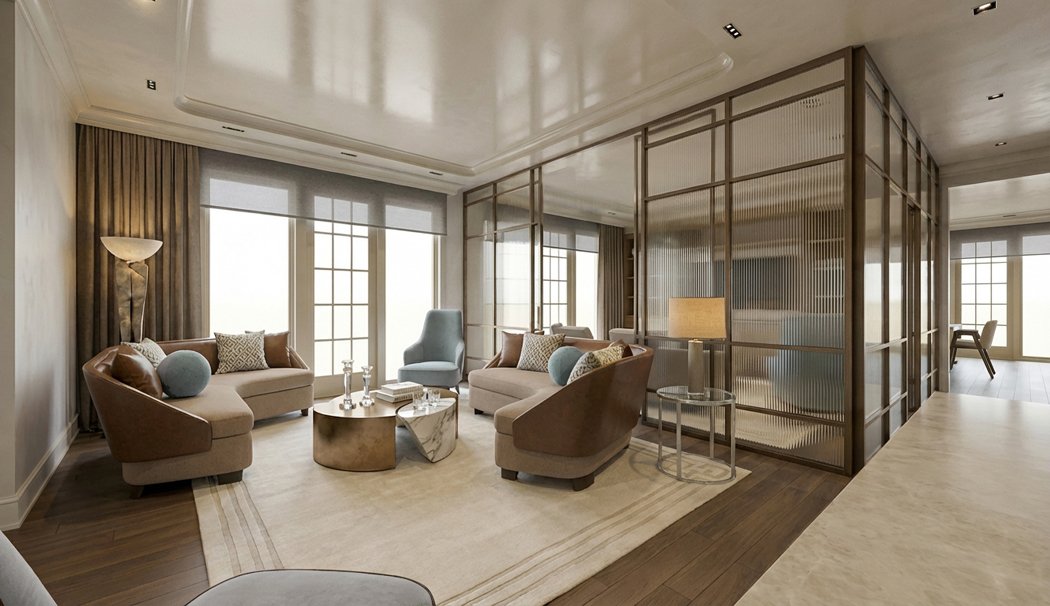
In one residence, the owners had two grown children but only one guest bedroom. They assumed that when both children visited, one would need to stay at a nearby hotel.
The living room, however, was unusually large. Rather than accepting the lack of sleeping space as unavoidable, we proposed an L-shaped fluted-glass enclosure within the living area. It created a media room that remained visually connected to the larger space while providing privacy when needed. A sofa bed allowed the room to become occasional guest accommodation without permanently sacrificing openness.
The solution answered more than a request for another bedroom. It responded to the underlying desire for the family to be able to stay together. It also made the residence more useful, more flexible, and architecturally richer.
That is the difference between translating a client’s life and simply drawing what has been requested.
Choose a Process You Can Understand
Ask each architect not only what phases their process includes, but how ideas will be communicated to you.
Architects are trained to understand plans, sections, elevations, and technical drawings. Most clients are not. A productive relationship requires a shared means of communication.
Depending on the project and client, that may include:
Hand sketches
Plans and elevations
Three-dimensional renderings
Computer-generated walkthroughs
Physical models
Material samples
Mockups
Furniture plans
Lighting studies
Site visits and precedent imagery
An architect who communicates only through technical plans may be an excellent fit for a client who reads drawings fluently. Another client may need models, walkthroughs, or material studies to understand how a room will feel.
Neither method is universally correct. What matters is whether the architect can communicate in a way that allows you to participate confidently.
Design is also iterative. Just as writing improves through rewriting, architecture develops through testing, reconsideration, and refinement. The first idea may reveal the direction, but it should not be protected merely because it came first.
Ask how many options or iterations are anticipated, how feedback will be incorporated, and how the architect determines when the design is sufficiently resolved to move forward.
Your level of involvement can also vary. Some clients want to participate in nearly every decision. Others prefer to establish the larger goals and trust the architect to manage much of the detail. A good process can accommodate either approach, provided expectations are discussed openly.
Regular communication helps keep the number of decisions from becoming overwhelming. During active design periods, a recurring weekly or biweekly meeting can create a predictable time for review, questions, and approvals.
Builders, engineers, landscape architects, lighting designers, and other specialists should also be incorporated at the appropriate stage. Early collaboration allows the design, construction methods, engineering, and budget to develop together rather than collide later.
Understand What the Architect’s Services Include
“Architectural services” can mean very different things from one proposal to another.
At one end is a limited set of drawings intended primarily for pricing, permitting, or construction. At the other is a full-service relationship in which the architect remains closely involved from early planning through completion.
A comprehensive scope may include:
Property and zoning analysis
Programming
Conceptual design
Schematic design
Design development
Entitlement or variance work
Coordination of structural, mechanical, civil, landscape, lighting, and other consultants
Construction documents
Interior architecture
Interior design and procurement
Assistance selecting a contractor
Review of bids or pricing
Construction-phase meetings and site visits
Review of shop drawings, samples, and substitutions
Resolution of design questions during construction
Final furnishing and installation
Not every project requires every service. What matters is that omissions are deliberate and clearly understood.
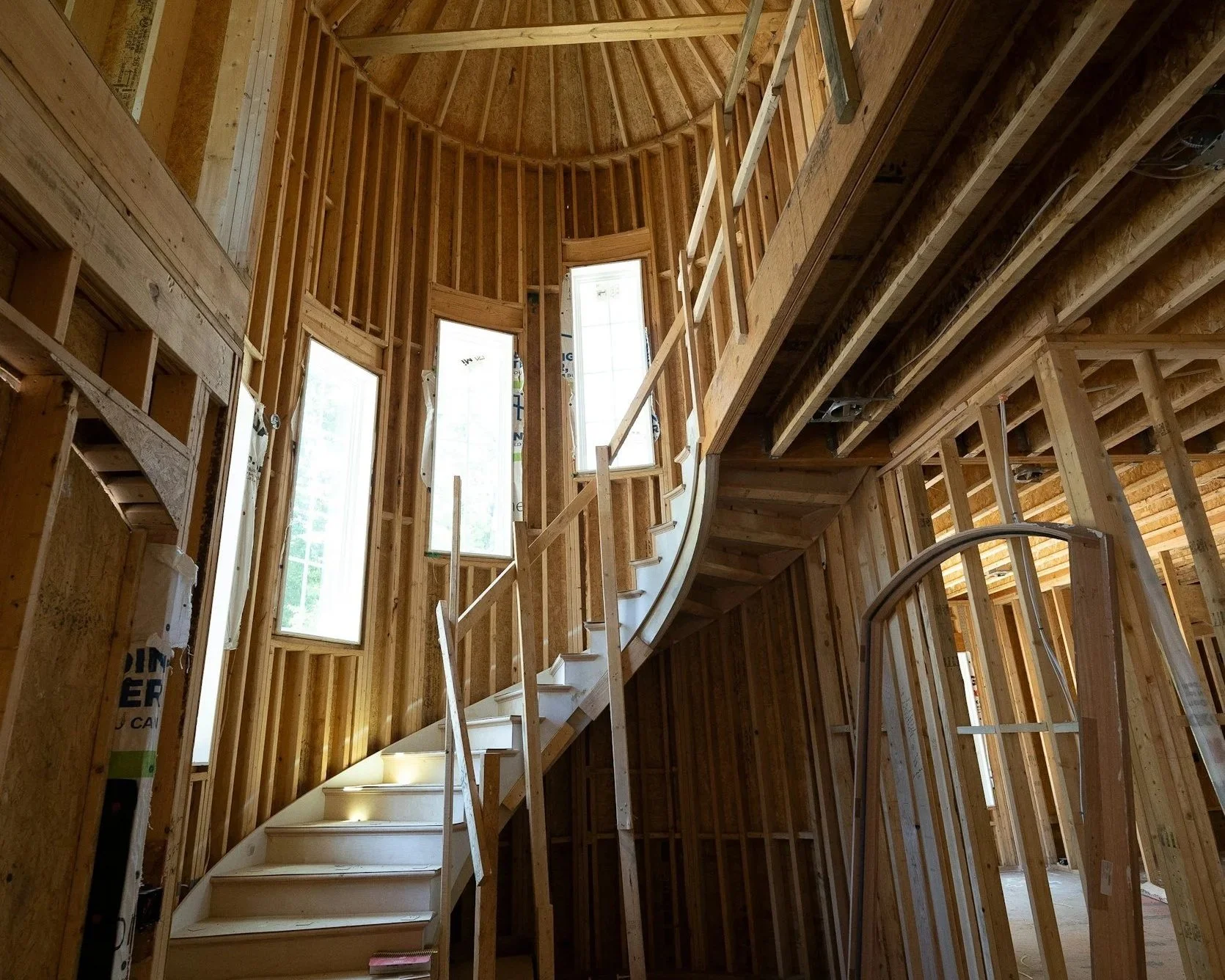
The difference between a permit set and a fully developed architectural project is significant. Drawings are an abstraction of an unbuilt reality. Even highly detailed documents cannot anticipate every existing condition, construction question, material variation, or coordination issue.
When the architect remains involved during construction, they can help interpret the design intent, review proposed changes, answer questions, and advise the client as the work takes physical form.
Construction-phase involvement is often among the first services reduced in a lower-fee proposal because it extends over a long period. Other reductions may be less obvious: fewer design iterations, fewer meetings, less visualization, limited consultant coordination, or less time from the principal.
Architecture and interior design should also be coordinated early whenever possible. The dimensions of a room, the placement of doors and windows, lighting, millwork, furniture, artwork, and materials are part of one experience. Treating interiors as a later decorative layer can create avoidable compromises.
Evaluate Communication, Judgment, and Creative Chemistry
A custom home is an intimate and extended collaboration. You do not need to become close friends with your architect, but you should feel comfortable being candid with them.
Communication should be:
Regular
Honest
Informative
Clear
Enjoyable
Authoritative when decisions require leadership
Disagreement is not necessarily a sign of a poor relationship. An architect should be willing to challenge an assumption when experience suggests a stronger solution.
The important question is how disagreement is handled. A thoughtful architect should explain the concern clearly, listen to the client’s priorities, and propose an alternative rather than merely rejecting an idea.
The architect’s advocacy for the design and the client’s priorities should not be opposing forces. The design should be the physical expression of those priorities, informed by the architect’s knowledge and creativity.
Strong creative chemistry can feel like finishing each other’s sentences. Clients begin recognizing ideas that belong to the project even while traveling, shopping, or visiting another building. They may send a photograph of a material or room and ask whether it aligns with the shared vision.
That kind of exchange develops when the architect and client have established a common language.
After the initial meeting, you should feel: Seen, comfortable, and excited to begin.
Compare Proposals and Fees Carefully
Two architectural proposals for the same project may differ significantly because the services behind them are not equivalent.
Do not compare only the total fee. Compare what the fee provides.
Ask each architect about:
The phases and services included
Specific deliverables
The number and frequency of meetings
The expected level of design iteration
Renderings, models, walkthroughs, or other presentation tools
Consultant coordination
Interior architecture and interior design
Construction-phase services
Hourly rates
Additional services
Reimbursable expenses
Who will actually design and manage the project
The last question is particularly important.
In some practices, the principal who led the initial interview may have limited involvement once the project begins. In a principal-led practice, the principal remains directly involved in design and major decisions. Both structures can work, but the client should know which one they are selecting.
A dramatically lower fee may reflect a narrower scope, fewer meetings, fewer iterations, less experienced staff, reduced construction involvement, or fewer deliverables. That does not automatically make the proposal inappropriate, but it does mean the proposals should not be treated as interchangeable.
Detailed architectural documents provide the construction team with clearer instructions about what is intended and how the parts should come together. A limited set leaves more decisions open to interpretation during construction, when changes may be more disruptive and expensive.
Architectural fees should therefore be considered in relation to the larger investment. The design and documents become the basis upon which the entire project is priced, approved, coordinated, and built.
The lowest fee is not necessarily the best value. The relevant question is what level of thought, attention, guidance, and risk reduction the services provide.
Verify Qualifications, References, and Capacity
Before making a final decision, verify the practical foundations of the relationship.
Confirm:
Professional licensure
Professional liability insurance
Relevant education and credentials
Experience with comparable projects or complexity
Who will personally lead the work
The firm’s current workload and anticipated schedule
Experience with entitlement or zoning when the project requires it
Experience in the exact municipality is not always essential. A capable architect can research and work effectively in a new jurisdiction.
Local or specialized experience becomes more important when a project involves an unusually restrictive municipality, homeowners’ association, historic commission, planning council, zoning variance, difficult site, or complex entitlement process.
Ask for references from former clients. Useful questions include:
What was the architect like to work with?
Did communication remain consistent?
How did the architect handle difficult decisions?
Did the design process feel organized?
Were delays explained and managed?
How did the architect collaborate with the builder?
Did the project remain reasonably aligned with the established budget?
Is the finished home better because of the architect’s involvement?
Would you hire the architect again?
Builder references can also be useful, but they should be understood in context. Architects and builders have different responsibilities and may sometimes advocate for different priorities. A productive tension does not necessarily indicate that either performed poorly.
When possible, visit a finished project. Photographs are selective. Experiencing a completed building reveals proportion, material, sound, light, workmanship, and atmosphere in ways images cannot.
Finally, ask directly about capacity. The architect should be able to describe when the work can begin, who will be assigned to it, and how the proposed schedule is reflected in the agreement.
Warning Signs When Selecting an Architect
Exercise caution when:
The proposal is vague about scope, deliverables, or exclusions.
The architect avoids discussing budget or treats it as someone else’s concern.
There is little curiosity about the site, context, history, or people who will inhabit the home.
Construction-phase involvement is minimal or undefined.
The architect agrees with every request without discussing its implications.
Long-term needs and future use are never explored.
Communication is already inconsistent before the relationship has begun.
The architect cannot provide appropriate references.
It is unclear who will actually design and manage the project.
The architect struggles to explain ideas in language you understand.
The conversation reveals little respect for precedent or lessons learned from earlier buildings.
You feel pressured to sign before the scope and relationship are clear.
No architect will have every answer during an initial meeting. They should, however, demonstrate curiosity, judgment, clarity, and a willingness to contribute meaningfully to the conversation.
Questions to Ask When Interviewing an Architect
Use these questions to compare not only qualifications, but the quality of each architect’s thinking:
How would you begin understanding how we live?
What would you want to learn about us before beginning design?
Who will personally design and manage our project?
How would you describe your design process?
How will you present ideas and help us visualize the design?
How do you incorporate client feedback?
How do you approach budget throughout the design process?
What is included—and excluded—from your proposed services?
How do you work with builders, engineers, and other consultants?
What role do you play during construction?
What challenges do you initially anticipate with our property or program?
How do you handle disagreements with clients?
What does a successful client relationship look like to you?
Why do you believe you may be the right architect for this particular project?
Pay attention not only to the answers, but to the questions the architect asks in return.
Making the Final Decision

When two architects are similarly qualified, the final choice should come down to a combination of design ability, process, trust, communication, judgment, references, and creative chemistry.
Do not choose solely because one portfolio already contains the house you think you want. A custom home should emerge from your life and site, not from the repetition of an earlier project.
Do not choose solely by fee. The architect’s decisions will influence the quality, experience, coordination, and long-term meaning of an investment far greater than the professional fee itself.
The right architect is someone who sees you clearly. They are excited by your project, capable of introducing ideas you would not reach alone, and experienced enough to make decisions with authority when the work demands it.
They should be willing to listen, challenge, advise, translate, and advocate.
Most of all, they should make you feel that the process of creating a home will be thoughtful, collaborative, and worth undertaking together.
Considering a custom home?
A meaningful project begins with a conversation about how you live, what you value, and what the site makes possible.
About the Author
Adam Raiffe is the founder and principal of Studio Raiffe, an architecture and interior design practice based in Morristown, New Jersey. His work is grounded in careful listening and the translation of people, place, and time into architecture designed for the lives of its occupants.